


Among all the sufferings experienced by human beings, illness occupies a unique and painful place. Poverty may deprive a person of wealth, and adversity may challenge one’s ambitions, but illness directly affects the body, mind, emotions, relationships, and spiritual life. When disease becomes severe, even the richest and most powerful individuals may find themselves helpless before pain and mortality.
The Hindu tradition has long recognized health as one of life’s highest blessings. The Vedas, Upanishads, Puranas and Ayurvedic scriptures consistently emphasize that a healthy body is a sacred instrument for the pursuit of Dharma (righteousness), Artha (prosperity), Kama (legitimate desires), and Moksha (liberation).
In Hinduism, the presiding deity of health, healing, medicine, rejuvenation, and longevity is Lord Dhanvantari, the divine physician and the originator of Ayurveda. He is worshipped as an incarnation of Lord Vishnu who emerged during the churning of the cosmic ocean carrying the pot of elixir, the nectar of immortality. Health is not merely the absence of disease. Health must be viewed as a state of harmony between body, mind, senses, intellect, spirit and environment.
The ancient Ayurvedic definition of health is:
समदोषः समाग्निश्र्च समधातुलक्रियः
प्रसन्नात्मेन्द्रियमनः स्वस्थ इत्यभिधीयते
Samadoshah Samaagnishcha
Samadhaatumalakriyah
Prasannaatmendriyamanah Swastha
Ityabhidheeyate.
One whose bodily doshas (Vaat, Pitta & Kapha) are balanced, digestive fire is balanced, bodily tissues and excretory functions are working properly, and whose mind, senses, and soul are peaceful is considered healthy. This definition demonstrates that true health encompasses physical, mental, emotional, and spiritual wellbeing.
Every human being possesses talents, aspirations, & duties. Disease often prevents individuals from working effectively, supporting families, pursuing education, serving society and engaging in spiritual practices. A healthy body enables achievement, while chronic illness can severely restrict human potential. The body is often described as the vehicle of the soul and without a functional body, many noble pursuits become difficult.
Pain is among the most immediate consequences of disease. Ancient sages recognized fever, weakness, injury, loss of vitality and debilitating conditions as serious obstacles to human happiness. Even simple tasks become difficult when the body suffers. The Mahabharata repeatedly emphasizes that health is superior even to great wealth because wealth cannot always purchase relief from suffering.
Many diseases affect not only the body but also the mind. Illness frequently produces fear, anxiety, depression, helplessness and discouragement. The uncertainty associated with disease can become a source of great psychological suffering. Thus, healing of both mind and body is needed.
A serious disease may affect an entire family. Medical expenses, inability to work, and emotional stress place considerable burdens upon loved ones. A healthy individual contributes to society, whereas prolonged illness often requires support from others. Thus, sickness extends beyond the afflicted individual and influences the broader community.
Meditation, study, worship, pilgrimage, charity, and service require energy and focus. When a person’s mind is absorbed by pain, concentration becomes difficult. For this reason the scriptures frequently include prayers for health and longevity. The goal is not merely comfort but the ability to pursue spiritual growth.
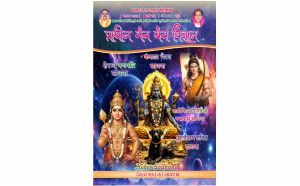
Lord Dhanvantari: The Divine Physician Among all Hindu deities associated with wellbeing, Lord Dhanvantari holds a special place. He emerged during the Samudra Manthana, the cosmic churning of the ocean, not only carrying the pot of elixir but also Ayurvedic wisdom and divine healing energy. He is regarded as the God of Ayurveda, the divine doctor, the bestower of health, the remover of disease and an incarnation of Lord Vishnu. His appearance symbolizes the truth that healing is a sacred gift from the Divine.
The Vedas repeatedly pray for long life and health. One famous prayer from the Yajurveda says:
पश्येम शरदः शतम्
जीवेम शरदः शतम्
Pasyema Sharadah Shatam
Jeevema Sharadah Shatam
i.e. May we see a hundred autumns. May we live a hundred years.
This prayer demonstrates the Vedic desire not merely for longevity but for healthy longevity.
Ayurveda, traditionally attributed to Lord Dhanvantari, seeks to restore balance rather than merely suppress symptoms. Ayurveda emphasizes proper diet, lifestyle discipline, seasonal routines, yoga, meditation, herbal medicine and mental wellbeing. Its central philosophy is prevention before cure. A balanced life naturally attracts health and longevity.
There are situations where we are left with no hope of ailment and that’s where the blessings of Lord Dhanvantari come as a savior. Even in today’s scientific world, we can see many tribes who are deprived of medical science but have faith in mantra sadhanas are able to cure many diseases. Medical science has not been able to accept the efficacy of mantra sadhanas till now. Mantra sadhanas can revive even a body lying on a death bed.
There are few sadhanas using which the sages living in isolated locations can cure their diseases. One such extraordinary sadhana is Dhanvantri Siddhi Sadhana procedure using which a person can get rid of all the diseases.
This procedure is a blessing from our sages and has been obtained from a great Yogi. The Yogi told us that after performing this sadhana, a person is not only able to get rid of his physical diseases but also gets rid of mental problems. The person starts to live a happy and energetic life, his working capability increases many folds, and no disease can further harm him.
Sadhana Procedure:
One needs Dhanvantari Yantra, Ashmina and Dhanvantari Rosary for this sadhana. The most auspicious day to perform this sadhana is on Dhanvantari Jayanti however, the same can also be performed on the 13th day of the dark lunar phase. One should eat food only once on the day of sadhana but can have fruits as other meals. One should not leave the sadhana in between, however if it is unavoidable, one should wash the hands and feet again and then only restart the sadhana. The sadhak should perform this sadhana with full devotion and should prefer to remain silent.
Sadhak should clean the worship place before starting the sadhana and then take a bath. Get in clean and fresh yellow clothes and sit on a yellow mat facing east. Take a wooden plank and cover it with fresh yellow cloth. First, place a picture of Revered SadGurudev and worship Him with vermillion, rice grains and flowers. Offer your prayers to Gurudev and seek His blessings for success in the sadhana.
Next chant one round of Guru Mantra. Now take the yantra and place it in front of Gurudev’s picture. Worship the yantra with vermillion, unbroken rice grains and flowers. Make a mound of rice grains dyed in vermillion on the left side of the yantra and place Ashimina on it and worship Ashmina too with vermillion, unbroken rice grains and flowers. Next light a ghee lamp and an incense stick.
Now pray to Lord Dhanvantari and offer flowers on to the yantra chanting thus:
Satyam Cha Yena Niratam Roogam Vidhootam,
Anveshitam Cha Savidhim Aarogyamasya.
Ghoordham Nighoordham Aushdhyaroopam,
Dhanvantari Cha Satatam Pranamaami Nityam
Now chant 11 rounds of the below mantra with the rosary and then place all the articles in a clay pot.
Mantra
||Om Ram Rudra Roganaashaaya Dhanvantaryai Phat||
।। ऊँ रं रुद्र रोगनाशाय धनवन्तर्यै फट् ।।
Keep all the sadhana articles in your worship place and continue to chant one round of the above mantra for next 13 days of the lunar phase. Drop all the sadhana articles along with two handfuls of rice grains in a river or pond on the last day after completing the mantra chanting.
It is mandatory to obtain Guru Diksha from Revered Gurudev before performing any Sadhana or taking any other Diksha. Please contact Kailash Siddhashram, Jodhpur through Email , Whatsapp, Phone or Submit Request to obtain consecrated-energized and mantra-sanctified Sadhana material and further guidance,